The Dating Dilemma
What is Dating?
Dating appears to be the willingness aspect of a larger endeavour: often getting married or finding a lifelong partner, sometimes finding a romantic companion for social activities and sexual enjoyment.
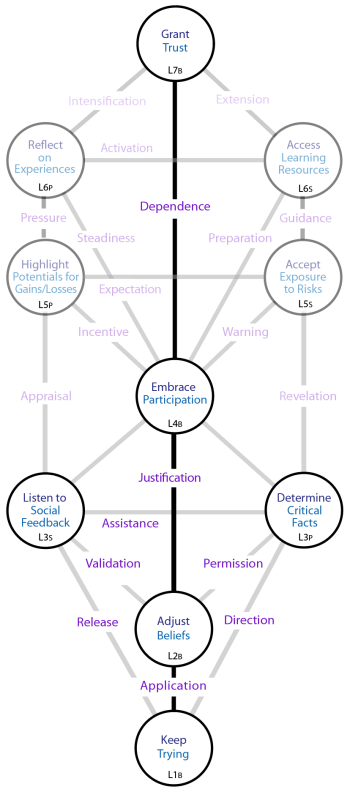
So dating is about whether or not to get involved with another person, and ultimately become seriously involved. That means the Tree should provide assistance in understanding and managing dating.
The Initial Attempt
Dating takes courage. So the central spine of the framework, especially the lower three Centres, dominates initial efforts.
If courageous efforts are to have any chance, there must be some granting of . Without that, any interaction is poisoned. Any genuine reason not to grant trust needs to be acted on promptly by disengagement.
Given a readiness to trust, unless a person is willing to participate in the dating scene, nothing will ever happen. may involve attending events like celebrations or dances, taking up a social hobby or sport where suitable others will be present, becoming part of a gym or a club scene, or socializing in a café or over a canteen lunch.
Participation is justified by about dating, beliefs about oneself and the requirements for a suitable partner. Existing beliefs may focus on looks, on work, on behaviours, on responsiveness, on the process of relating, on fate, interpersonal chemistry and more. Some of those beliefs should be unchangeable personal principles but, at the date itself, a readiness to adjust some beliefs is probably essential.
Ultimately, or sometimes as soon as possible, there must be an actual event that allows time together and physical closeness: coffee, dinner, walk in the park, or similar. This is —with the full knowledge that the person may well turn out to be unsuitable or even intolerable.
Being Too Self-Centred
If a person is overly self-centred, then the notion of just getting together, being themselves and seeing how the interaction evolves seems too risky, and demands too much self-discipline and belief in goodness.
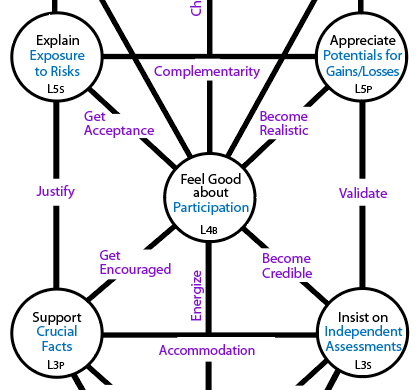
So the alternate Tree applies: especially the central section—click on the thumbnail to see.
The attitude and focus will be different. Such a person wants to feel good about participation and that means getting a quick hit from looks or wealth. There is also an excessive focus on gaining or winning, a hasty demand for facts, and an over-dependence on what others will think.
Facing the Reality
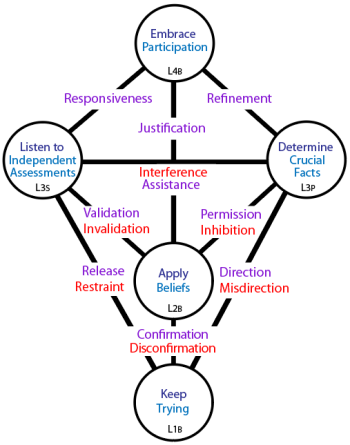
Following an initial connection, involvement starts developing, and fantasies become confronted by an emerging reality. Facts about the person flow from conversations and interactions. The potential partner's way of relating and hopes for the future inevitably emerge with additional dates. the facts about evolving interactions will impact on , and to become more involved.
Suddenly, numerous channels come into play: to and from especially.
Even if the person wants to avoid the reality, friends and family will make their own assessment and be feeding views back subtly or stridently. Such views can be discouraging or encouraging.
If all the evidence and feedback points in the same negative direction, you will quickly discontinue your involvement. If positive, you will but with more confidence that this is a worthwhile relationship that could develop into something meaningful and even serious.
Buttressing Trust
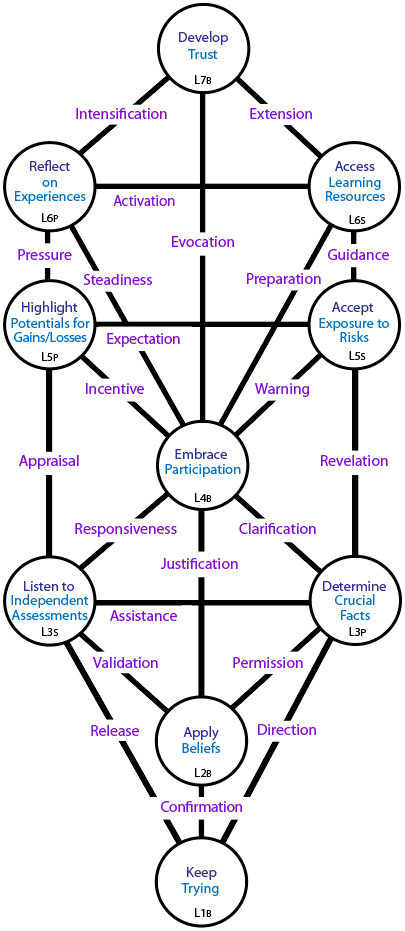
The focus for participation now moves from the dating scene to the emerging relationship. The primary consideration in deepening that involvement is whether the potential partner can be trusted: click on the lower right thumbnail to be reminded of the full framework.
is primarily about feeling safe, respected and accepted as you are, but also depends on receiving affection and admiration. But trusting will only emerge in its strongest form if you are trustworthy and deserve trust too.
Because it is so difficult to be sure you can , emerges as crucial in deciding whether to commit yourself. Reflecting on your experiences during and between dates plays a major role in intensifying trust. However, there is also a lot to learn about people and relationships, especially when younger.
Self-help books, family members, close friends, relationship influencers and therapists: all can be a source of learning, even if not equally reliably.
As you learn more, you have to weigh up the potentials in the relationship and decide for yourself about the in becoming serious.
Ultimately all the channels in the Tree are potentially relevant. Most can produce a negative result (e.g. appraisal or guidance may be positive or negative) and some can operate in a negative form (e.g. the incentive may become a disincentive, moderation may morph into destabilization).
 The Future of an Involvement
Two partners can be together for months or years, and yet it remains a convenience rather than a serious involvement.
If it does become a serious involvement, then this is just the beginning. The dimension of relating as an endeavour has been met, but there is much more to be tackled:
to be developed (e.g. children, location), to be smoothed, and selves to be grown, to be agreed, to be acquired, and to be pursued.
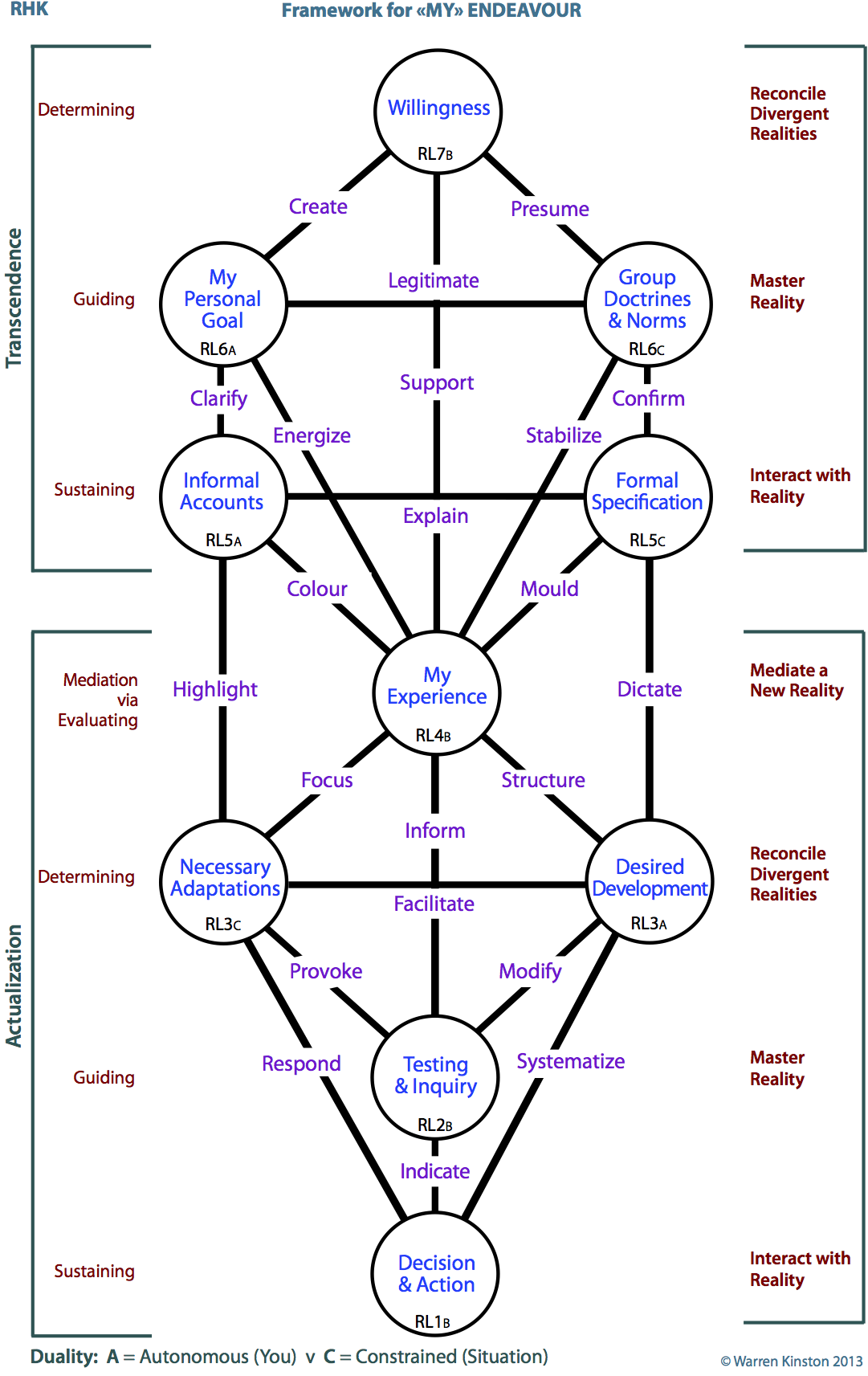
Of course, the use of these other levels also influences willingness (as per the endeavour tree: click thumbnail to see) and will modify the sense and strength of involvement.
The finding here is that the work of relating—strengthening the relationship, working through differences and difficulties, organizing enjoyable togetherness—will not get done effectively if willingness is insufficient. Willingness should be recognized as a complicated phenomenon that provides the foundation for togetherness.
► For more on , see the Q3 arena of individualizing.
► For more on the , see clarification of social compatibility.
Arranged Marriages
Dating is not the only way to find a partner: in many cultures families arrange marriages, or a match-maker acts as an intermediary. In those cases, right from the outset is activated as practical realities are identified and independent assessments are made. are also calculated and often form the primary driver.
Having focused here on becoming seriously involved, how does it go wrong?
-
Consider painful disengagement.
OR -
Back to the Review.
Originally posted: 6-Jun-2026.